
Intensive Learning Lab

Intensive, time-limited support that prepares a student and their school for the same return.
The Lab isn't designed to become a student's permanent placement. It's a multi-month intensive, with a month of preparation before it and recurring support after exit, that gives students with complex needs coordinated academic, behavioral, and social-emotional support. The team at the student’s local school is part of the plan from the very beginning, so the return is something everyone has prepared for.
In the wrong place? Do you…
“Professionally addressed conflict and established boundaries by bringing it back to the data.”
“Great input and guidance.”
“I’m learning, I’m growing, I’m making mistakes, and I’m ready to dive in.”
When a Student Needs More Than Their School Can Offer Right Now
Some students need more coordinated support than their school can provide at this moment. Their academic, behavioral, and psychological needs are connected, but the supports available to them usually aren't: instruction happens in one place, behavior support in another, and counseling and case management somewhere else, with no one coordinating the whole experience. Teams in this position have usually tried a great deal of interventions and services before they reach the honest conclusion that this student needs more than the building can offer right now.
The usual answer is a more restrictive placement. A student can make real progress somewhere else and still return to a school that had no part in that progress and no plan for receiving it. However, this is also how a hard-won gain becomes another difficult transition. Students coming back from juvenile justice and other more intensive placements face the same gap. The return is often the least planned part of their path.
The Lab starts from the return. It is a time-limited, intensive model built around one question: what has to change - for the student and for the team receiving them - so that coming back to their local school works this time?
The Lab also takes on a different kind of hard case. Sometimes the school, the family, and the people supporting them no longer share a picture of what a student needs and that disagreement has moved to mediation or due process. At that point a careful look at the student, grounded in records and direct observation, matters more than it ever has - and we have found it is often the hardest third-party service to integrate into the case.
How Co-Implemented Services Actually Work
While a comprehensive student consult may take a little as one month, intensive progamming runs about five months from start to finish: a month of preparation, a three or four month intensive, and a month of follow-up after the student returns. The local team stays involved at every stage because the people who will support the student afterward need to be part of the work rather than receiving a report at the end of it.
-
For a litigious consult or a potential Labbie, you tell us about the student and we determine the fittedness of your student’s needs with our team’s expertise.
-
You send a full set of records and share more specific details about the student. We ask for them because they become the foundation of the student's plan.
The student, family, and school team help build a plan around the student's goals, current skills, and the setting they're returning to.
-
We coordinate with the local team before the intensive begins, so roles, communication, and alignment with the home school's curriculum are settled in advance.
For a litigious complex student consultation, we observe the student in person, in the setting where the questions about their needs are arising.
-
For a litigious case, we share a clear account of what the records and observation show about the student's needs. We attend IEP meetings as the case requires, to present and explain what we found and answer questions about it.
For Labbies enrolled in the The Lab, daily and weekly remote programming with local support built in: academics aligned to the home school's curriculum, executive functioning and social-emotional skill building, daily mentoring, and coordinated case management.
Progress is measured throughout and reviewed with everyone involved, so decisions rest on shared data rather than impressions.
The return happens in steps. Responsibility moves to the home school on a structured schedule to ensure continual progress and investment on both sides.
-
Ongoing team support after the Labbie’s return or case resolution, extending coaching for the receiving team as they take the lead.
Please note:
If you're looking for a setting that holds a student indefinitely, or a program the school can step back from while it runs, The Lab is not built that way and we will exit students whose teams are disengaged from the co-implemented intensive learning lab model.
What your team does:
You refer and authorize the engagement, keep a local team actively involved throughout, share information under the consent procedures we agree on, and prepare the home school to receive the student. Families take part in planning and in the return.
What we do:
We coordinate the student's full program, deliver the intensive programming and mentoring, manage the case across everyone involved, measure progress, and coach the receiving team through the transition.
Intentionally Built for Both

The Lab is designed to help students build…
Increased engagement in learning
Steadier emotional and behavioral regulation
Stronger executive functioning skills
Readiness to participate fully in school
Greater confidence and independence
Most intensive programs focus solely on the student. The Lab develops both the student and the system. While a student receives intensive, individualized support, the educators, family, and local team around them build the knowledge, confidence, and structures they'll need once the student is back.
The Lab is designed to help receiving teams build…
Confidence supporting students with complex needs
Stronger collaboration across disciplines
Practical strategies that stay after the program ends
Structures that make the next intensive case more manageable
Less reliance on outside intervention
Every intensive ends with documented progress data, a transition plan the home school helped build, and recurring follow-up after their return.
Free resources you can use with your team
We're building a transition checklist for teams bringing a student back from a more intensive or restrictive setting. It covers what needs to be in place before the first day back, who holds each piece, and what to watch in the first weeks.
It isn't ready yet, so we'll send it when it's right rather than publish it early.




We'll email the checklist when it's released, along with occasional resources from The Lab. You can unsubscribe at any time - no hard feelings.
Who this works for - and who it doesn’t.

The Lab is likely the right fit for your student if . . .
Has needs that exceed what their school can provide right now, after the available supports have been tried
Is at risk of a more restrictive placement, and the goal is to keep them connected to their local school
Is returning from juvenile justice or another restrictive setting and needs a planned transition
Needs academic, behavioral, and emotional support coordinated together rather than delivered separately
. . . and if your team can . . .
Keep a local team involved from intake through follow-up
Bring the home school into planning the return
The litigious consult is likely the right fit if . . .
The case is in mediation or due process, or appears to be heading there
The team needs a careful, student-focused account of the student's needs, grounded in records and direct observation
That third-party account will need to be explained in person at IEP meetings or in court over the course of the case

The Lab isn’t the right fit if you’re looking for . . .
Legal advice or legal representation — that's your attorney. We work with them throughout the litigious consult.
A functional behavioral assessment, with no dispute involved and no intensive programming needed — that's The Navigators.
Organization-wide implementation or leadership support — that's The Alliance.
Standalone professional learning or continuing education — that's TLC University.
A long-term setting with no planned return. We'll tell you so early and help you think about where to look.
Research The Lab is Built On
-
-
-
-
-
-
-
-
-
Beatson, R., Quach, J., Canterford, L., Farrow, P., Bagnall, C., Hockey, P., Phillips, E. J., Patton, G., Olsson, C., Ride, J., Roy, A., & Mundy, L. K. (2023). Improving primary to secondary school transitions: A systematic review of school-based interventions to prepare and support student social-emotional and educational outcomes. Educational Research Review.

The Lab draws on research about intensive, individualized intervention, coordinated support across disciplines, and the transitions students make between settings. The work listed here supports the practices the model uses.
The Lab also studies its own work. Every student served contributes to the ongoing refinement of the model through embedded evaluation and a research partnership with Utah State University, so the program keeps changing based on evidence, implementation data, and what actually happens after students return.
People and Partnerships of The Lab
-

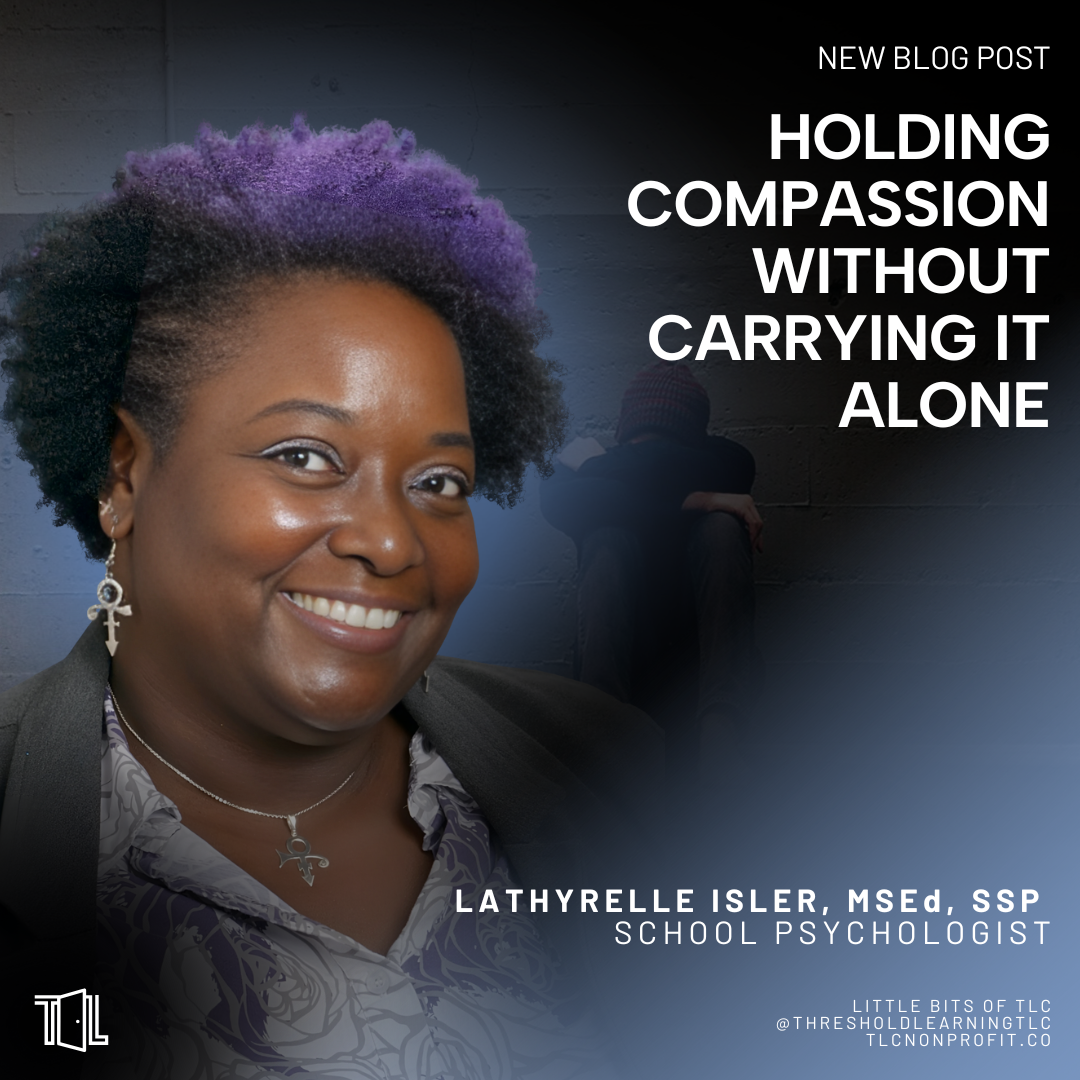
Lathyrelle Isler, MSEd, SSP
Is the central communication bridge between the sending team, the receiving local school, the family, and outside clinical or therapeutic providers.
PROGRAM CODIRECTOR
-

Tracey Milarsky, PhD
Bridges academia and programming through mentorship, professional networking connections, and strategic guidance to enhance learning and innovation.
PROGRAM CODIRECTOR
-

Katherine Graves, PhD
Our partner on The Lab's embedded evaluation, helping us measure what changes for students and receiving teams and refine the model based on what we learn.
RESEARCH PARTNER
-

Waddell Hamer, MSW, LSW
Coordinates each student's plan across mentoring and case management; stays in close contact with the family and the home school through the intensive and the return.
INTEGRATED SERVICES COORDINATOR
-

Jonathon Barberio, MA, LPC
Conducts a holistic evaluation of the family system to understand the family's unique dynamics, strengths, and underlying challenges throughout the intensive.
FAMILY COACH
-

Lyndsay Palach Shelton, MA, LBSII
designs individualized re-entry strategies, trains receiving school staff, monitors student progress, and builds self-advocacy skills through the intensive progamming.
TRANSITION SPECIALIST
Three ways to
work with The Lab
Complex Student Consultation
For cases in mediation or due process, or heading there. We review the student's records, observe the student in person, and give the team a clear account of the student's needs, then attend IEP meetings to explain what we found and answer questions about it. The consult focuses on the student alone and runs from about a month to a year, depending on the case.

Therapeutic Lab Experience
The Lab's intensive model concentrated on behavior and regulation, with transition planning and follow-up included, for students whose academic needs can stay with their current program. This experience includes local mentor training and support, family coaching, ongoing individualized data collection aligned with the BIP and IEP goals.

Comprehensive Lab Experience
The full five-month therapeutic lab experience, including preparation, a multi-month intensive across academics, behavior, mentoring, and case management, a gradual-release transition, and ongoing follow-up. The academic schedule is designed based on current functional and grade levels, post-secondary outcomes, and local rapport.

Let’s talk
Book a call to talk through that student who’s still on your mind. Tell us where things stand, what has already been tried, and what the student needs next - and we'll tell you honestly which of these fits or whether one does.
If the case is in mediation or due process, tell us where it is in that process and what dates you're working against. Some of these conversations end with a different recommendation - it’s our goal to provide useful guidance regardless.
Please don't include the student's name or records when you book. We'll walk through consent and information sharing before anything identifying is shared.
Every consult starts the same way: with one student and a careful look at what they need. See you soon…
Typical Curiosities
-
No. The intensive is time-limited, with a planned return to the student's local school built in from the start. If a student needs a long-term setting with no planned return, we'll say so early and help you think about where to look.
-
The Comprehensive Lab Experience runs about five months: a preparation month, a three-month intensive, and a month of follow-up after the return.
The Complex Student Consult follows the case rather than a calendar and can run from about a month to a year, depending on where things stand and how many meetings are involved.
-
Yes. Students returning from juvenile justice and other restrictive settings are one of the groups the intensive is designed for. Referrals can come from the district, the education partner, or the agency coordinating the return.
-
The intensive is funded per student, and the cost covers the whole pathway, from preparation through the intensive, transition, and follow-up, rather than a set of separately billed services. The consult is scoped to the case, because its length varies so widely.
Funding usually comes primarily through the referring district or agency, and we talk through scope and authorization on the first call.
-
Our focus is the student. We review the records, observe the student in person, and give a clear account of what we found, and we attend IEP meetings to explain it and answer questions.
We aren't attorneys and don't provide legal advice or legal representation; the legal side of the case stays with counsel.
-
We don't need identifying details to have a first conversation. Records are shared only after consent and information-sharing permissions are in place, and we walk through those procedures with you before anything is sent.
In a case that is in mediation or due process, we also follow whatever procedures counsel has set for sharing case materials.
-
Students work with a small, consistent team every day, and local supports are built into the plan so the student stays connected to their community. Depending on the needs of the student throughout the intensive, they may attend academic classes online or locally or a combination. Schedules are built monthly throughout the transition.
-
For the intensive, a local team that stays involved from intake through follow-up, someone at the home school who will help plan the return, and timely information sharing under the consent procedures we agree on at the start.
For the litigious consult, timely access to records, a setting where we can observe the student, and notice of the IEP meetings we're asked to attend. Both depend on that participation.
-
In the intensive, families help build the plan at intake, stay in regular contact with the student's team, and take part in shaping the return. They also have direct access to family coaching throughout the intensive following the initial intake assessment.
-
Progress is reviewed weekly with service providers and monthly with everyone involved, so the plan changes when the data says it should. If it becomes clear the model isn't right for a student or your team, we'll tell you directly and work with you on what comes next.
-
Recurring follow-ups about the student as long as the receiving team requests recurring professinal coaching.
More from The Lab


Be the first to know about what’s happening around TLC
Get a weekly update on current events, partnership spotlights, outreach efforts, Integros events, recent blogs, and more!
Your contribution supports The Lab.
TLC Nonprofit is a registered 501c3 organization. All donations are tax exempt.