
Alliance for District Leaders
Specialized programs your own team can run, evaluate, and keep improving.
The Alliance partners with district and school leaders to evaluate and develop programming for students with complex needs. It works best when a district is ready to look honestly at a program, make decisions based on what it finds, and stay involved long enough for the changes to hold.
We start with an honest look at how your programs are working, build an improvement plan with your leadership team, and coach alongside your staff until the work belongs to them. The Alliance partners with leaders who want specialized expertise alongside them, not in place of them.
Not looking to develop local specialized programs?
“There are many good things happening because of TLC. The challenging part, which is not a surprise, is that our system isn’t ready yet.”
“TLC has been a wonderful resource to our staff and students.”
“The combination of in-person and virtual time has really helped me out. I appreciated it before, and continue to appreciate it now.”
When a Program for Students with Complex Needs Isn't Working the Way It Should
“We know what we should be doing - we just can't seem to implement it consistently." Some version of that sentence begins most Alliance partnerships and it has almost never been a knowledge problem. Leaders responsible for specialized programs usually know what good practice looks like. What they often lack is the structure to make it happen similarly across every classroom - and a reliable way to tell whether it's working.
The signs are familiar. A program runs well in one building and differently in the next. It depends on one person's expertise and ‘the program’ leaves when that person leaves. Outcomes are hard to describe with confidence, so decisions about the program rest on impressions rather than evidence. Initiatives arrive with mandates and fade within a year or even a semester and each new one has to compete with whatever the last one left behind.
None of this reflects a lack of effort. Specialized programs are among the hardest work a district does - not to mention they're often built under pressure, staffed through shortages, and asked to serve students whose needs keep growing more complex.
The Alliance exists for the leaders who carry that work and want it to actually work - not just for their students, but for their staff too.
How Program Development Actually Works
Most consulting ends with recommendations. The Alliance partners through implementation. Every engagement follows the same cycle that is adapted to your programs and coaching is delivered remotely or onsite depending on the level of partnership you choose.
-
A structured conversation about the programs you're concerned about, what has already been tried, where things break down, and whether a partnership would add anything your leadership team couldn't do on its own.
-
We look closely at how your specialized programs are designed and run, using quality indicators for evidence-based and high-leverage practices.
-
We walk your leadership team through what we found, plainly, including what's working and should be protected.
-
Your leaders and ours set priorities together and build a roadmap your team helped write.
-
Coaching follows the roadmap rather than a fixed curriculum, and progress is measured as you go rather than at the end.
-
We review what the data shows with your team quarterly and adjust the plan where it needs adjusting monthly.
-
The tools, routines, and decision-making structures stay with your district, and your team leads the program from here.
Intentionally Integrated
We may not be the right fit if you are looking for a packaged program or someone to take the work away from your team. The Alliance works best when district leaders want specialized expertise alongside them while intentionally building local ownership.
What your team does:
You name a district sponsor and an operational lead before the work begins, keep leaders involved in setting priorities and making decisions, give us access to the programs and data we need, and make time for staff to take part in coaching. The partnership depends on that participation, because it is how the work becomes yours.
What we do:
We assess program quality, bring specialized expertise across disciplines, help design the roadmap, coach staff and leaders in the authentic setting, build in evaluation from the start, and plan the handoff from the first month.
Programs Your Leaders Can Describe, Defend, and Improve

Partnerships are designed to help district leaders gain:
A clear, evidence-based picture of how each specialized program is working
A prioritized roadmap their own team helped build
Decision-making routines grounded in program data rather than impressions
Measurable evidence of program quality they can bring to a board or a review
Less reliance on outside specialists over time
Partnerships are designed to help program staff gain:
More consistent use of evidence-based practices across classrooms and buildings
Staff competence built through coaching in their own setting
Clear roles, tools, and routines that stay when people change
Program designs that hold up beyond the partnership
Free resources you can use with your team right now.
See your program the way a quality review would!
These are three of the tools we use during program evaluations, so your leadership team can use them without us. Score a specialized program against the variety of applicable quality indicators for that program and you'll come away with a clearer sense of where it's strong and where it needs attention.
It works best when two or three leaders score the same program separately and then compare notes. They’re yours to keep and use however suits your team. Leave your email and all three arrive in a single email.
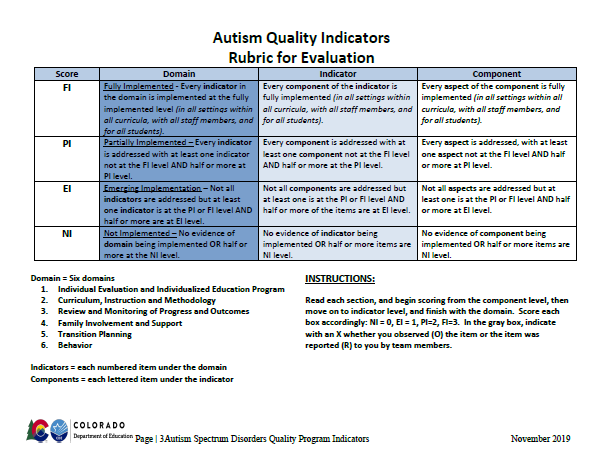
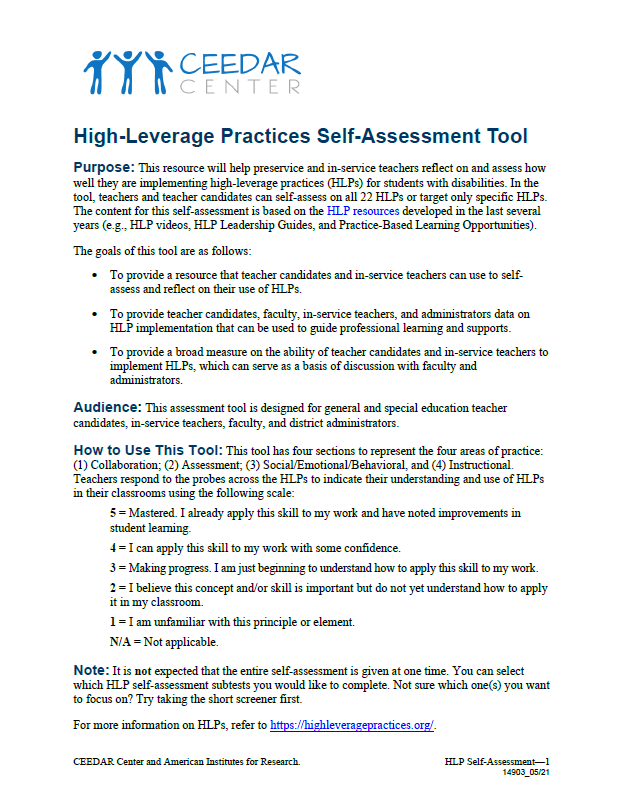
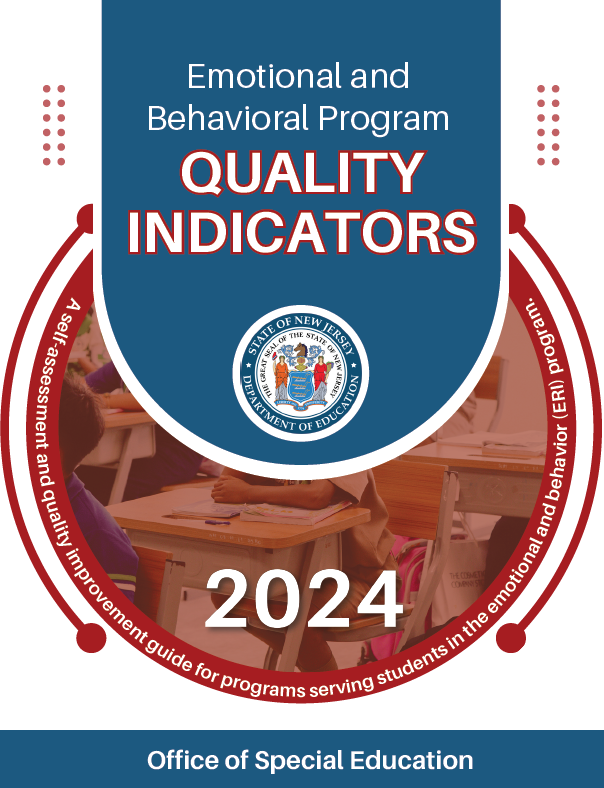
We'll email the self-assessments along with occasional resources from The Alliance. You can unsubscribe at any time - no hard feelings.
Who this is for - and who it isn’t.

The Alliance is likely the right fit if you're . . .
Responsible for specialized programs that run inconsistently across classrooms or buildings
Unsure how well a program is working and need evidence you can act on
Launching or redesigning a program for students with complex needs
Relying on one person's expertise and want the program to hold if that person leaves
Watching initiatives start strong and fade
. . . and if your district can . . .
Name a sponsor and an operational lead before the work begins
Keep leaders involved in setting priorities and making decisions
Prioritize time for staff to take part in coaching

The Alliance isn't the right fit if you're looking for . . .
A packaged program to adopt or a vendor to run the program for you. We'll tell you early if we sense this as your direction.
Intensive programming for a specific student — that's The Lab.
A complex student consult for a case in mediation or due process - that's now The Lab.
A functional behavioral assessment for an individual student — that's The Navigators.
BCBA fieldwork supervision as part of providing specialized expertise to your district — that's The Directory.
Standalone professional development or continuing education — that's The University.
Research The Alliance is Built On
The Alliance draws on evidence-based and high-leverage practices in special education. Multi-component frameworks integrating implementation science, directed consultation, leadership psychology, and organizational behavior management rely on empirical evidence demonstrating that organizational context directly drives intervention fidelity and service outcomes.
The work listed here supports the methods we use. Because we also evaluate our own work.
Program-quality tools, coaching protocols, and progress benchmarks are refined through use across partner districts, through the evaluation built into every partnership, and through a research partnership with Penn State University which receives deidentified partnership data to further refine the practice-to-research pipeline of findings.
People of The Alliance
-

Manny Huecias, IBT
Leads each partnership from the first consultation through the transfer of ownership and is the district's primary point of contact throughout.
PROGRAM DIRECTOR
-

Cara Wilmot, EdD
Oversees the quality of the model and the evaluation built into every partnership, including the program-quality assessment and how progress is measured.
EXPERT IN RESIDENCE
-
Team of Specialists
Coaches and evaluators with expertise across specialized and intensive programming work alongside district staff to see progress in their own local settings.
PROGRAM SPECIALISTS
Three ways to
work with The Alliance

Foundation Tier
An evaluation of your program as it stands now with a program-quality assessment, a findings briefing with your leadership team, and a prioritized improvement roadmap. The right level for districts that need a clear, evidence-based picture and a plan.
Implementation Tier
Everything in Foundation, plus remote coaching for your staff and progress monitoring as the roadmap is put into practice. The right level for districts ready to act on a roadmap with regular support and a clear view of whether it's working.

Transformation Tier
Everything in Implementation, with coaching delivered onsite in your buildings, alongside staff in the classrooms where the program runs. The right level for districts that want coaching in the authentic setting.

Leadership coaching and data coaching can be added to Foundation, Implementation, or Transformation, for districts that want dedicated support for the leaders guiding the work or for the staff using program data to make decisions.
Get Clarity
Request a program-clarity consultation. It's a structured conversation about your programs as they are now, what you want them to become, what's already been tried, and where things break down.
Some of these conversations end with us saying a partnership wouldn't add anything your team couldn't do on its own, and that's a useful outcome too.
Frequently Asked Questions
Districts often come to The Alliance after working with us on a smaller scale. A University project, completed by a district team at its own pace, sometimes shows that the program around it needs the kind of evaluation and coaching a partnership provides. A Navigators case can surface needs that reach beyond one student, and work with The Lab sometimes makes clear that a district wants to build stronger intensive programming of its own.
During and after a partnership, many districts use The University for staff learning that supports their roadmap. Unlike a partnership, a University course is something your staff work through themselves, and it pairs well with coaching that helps them put it into practice.
-
Partnerships are annual, and the scope is set by the number of programs, schools, and coaching teams involved and by your priorities.
We offer three levels of partnership, described below, and we'll recommend one after the program-clarity consultation rather than before it. Figures are shared in the proposal.
-
Most run for a school year and many continue for two or more with a defined renewal point each year.
Each renewal is a real decision. We review progress together and agree on whether to continue, change the scope, or close the partnership.
-
A named district sponsor and an operational lead before the work begins, leaders who stay involved in setting priorities and making decisions, access to the programs and data we need to assess them, and time for staff to take part in coaching. Without those, the work doesn't hold and we'd rather say so before a partnership starts than after.
-
Yes. Foundation is exactly that: an evaluation of how your program is working now, with findings and a roadmap your leadership team can act on.
Coaching can be added later if you decide you want support putting the roadmap into practice.
-
Yes, and it usually should. The assessment looks at what's already in place, and the roadmap builds on what's working rather than replacing it.
-
That depends on the level. Implementation partnerships include remote coaching, and Transformation partnerships include onsite coaching in your buildings. The cycle is the same either way.
-
Your district does. With identifying information removed, we share it with our research partners so the tools and methods we use keep improving across districts. The routines and decision-making structures built during the partnership stay with your district when it ends.
-
Your team leads the program. Planning for that handoff starts in the first month, so by the end your leaders and staff are using the tools and routines without us.
-
Yes, through The Lab. The consult supports cases that are in mediation or due process and it now sits with The Lab because its focus is a single student rather than the entire program that The Alliance focuses on. → The Lab
More from The Alliance
Be the first to know about what’s happening around TLC
Get a weekly update on current events, partnership spotlights, outreach efforts, Integros events, recent blogs, and more!
Your contribution supports The Alliance.
TLC Nonprofit is a registered 501c3 organization. All donations are tax exempt.