Starting With Purpose, Not Placement: Matching Students to Remote or Hybrid Learning with Intentionality
Written by Lathyrelle Isler, MSEd, SSP
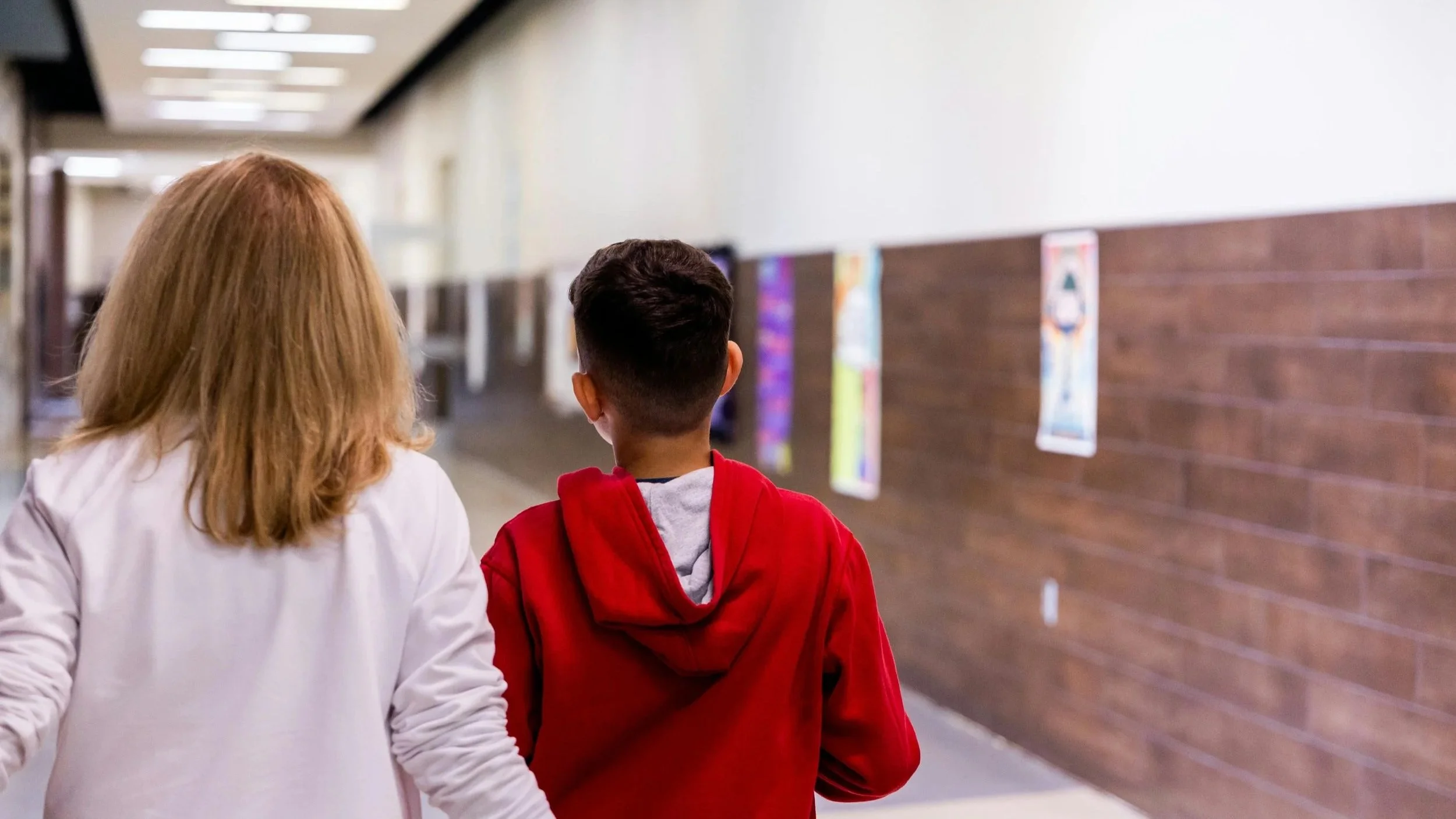
When a student returns to school after expulsion, psychiatric hospitalization, or detention, the question is usually, "Where can we place them?” However, the real question is: “What environment will help this student stabilize, re-engage, and move forward—without setting them up to fail again?”
Intensive remote and hybrid programs are increasingly part of that answer. But they are not a universal solution. Used well, they can serve as powerful bridges back to school. Used poorly, they can become isolating holding spaces that delay real progress.
So how do we decide if a student is actually a good fit?
Start With Purpose, Not Placement
Before evaluating the student, clarify the program's intent. An effective intensive remote or hybrid placement should serve one or more of three purposes:
Stabilization – reducing acute behavioral or emotional risk
Restoration – rebuilding regulation, trust, and engagement
Reentry – preparing for return to a less restrictive setting
If the placement is being used simply because there are no other options, or to “get the student out of the building,” it is unlikely to succeed—regardless of the student’s profile.
“If the placement is being used simply because there are no other options, or to “get the student out of the building,” it is unlikely to succeed—regardless of the student’s profile.”
The Five Questions That Matter The Most
1. Can safety be managed without immediate physical intervention?
This is the non-negotiable starting point. Remote and hybrid models rely on predictability and distance, not physical containment. If a student’s safety depends on in-the-moment, hands-on intervention, the model is not appropriate—yet.
A student may be a good fit if:
Their risk is known and pattern-based, not unpredictable
They are post-crisis, not actively escalating
There is a plan for managing distress that does not rely on physical control
A student is likely not ready if:
Aggression is severe and unpredictable
There is active, unmanaged suicidality
Safety requires an immediate in-person response
2. Does the student have any capacity for self-regulation?
This does not mean the student is fully regulated. It means there is at least a starting point. Remote programs can build regulation—but they cannot create it from nothing.
Look for:
The ability to use one or two coping strategies with prompting
Periods of baseline calm or neutrality
Some ability to recover after escalation
Be cautious if:
The student requires constant adult proximity to remain regulated
Escalations are prolonged and resistant to intervention
There is little awareness of internal state or triggers
3. Will this reduce obstacles or increase avoidance?
This is where teams can get it wrong. Remote learning works best when the environment is the problem, not the learning itself. The key question is simple: Will this placement help the student move toward engagement or further away from it?
Good candidates often:
Are overwhelmed by peer dynamics, noise, or transitions
Have anxiety tied to the physical school setting
Can engage in quieter, more controlled environments
Poor candidates often:
Avoid all forms of demand, regardless of setting
Have a history of disengagement in online learning
Use being at home as a way to escape expectations
“The key question is simple: Will this placement help the student move toward engagement or further away from it?”
4. Is There Enough Structure Outside of School?
Remote and hybrid models shift part of the educational environment into the home. That makes adult presence and partnership essential. Even the best-designed program cannot compensate for a complete absence of structure.
Strong conditions include:
A reliable adult who is available during learning time
Willingness to support routines and respond to issues
Basic capacity to monitor participation and safety
Significant risks include:
The student is left largely unsupervised
Caregivers are unable to intervene during escalation
A home environment that introduces additional instability
5. Is this part of a coordinated plan?
A remote or hybrid placement should never exist in isolation. It works best when it is embedded within a broader, aligned plan that includes:
Ongoing therapeutic or clinical support
Clear goals for what success looks like
Defined criteria for transition back to in-person learning
Without alignment, the placement becomes static. With alignment, it becomes directional. Additionally, timing matters more than labels. Two students returning from psychiatric care may look identical on paper but have very different readiness levels. The placement should match the student’s phase of recovery, not just their history.
A student is more likely to succeed in a remote or hybrid setting when they are:
Stabilizing, not stabilizing for the first time
Able to tolerate some structure, even inconsistently
In a phase where gradual re-entry is more appropriate than immediate immersion
“Two students returning from psychiatric care may look identical on paper but have very different readiness levels. The placement should match the student’s phase of recovery, not just their history.”
A Practical Way to Make the Decision
Teams often benefit from a simple internal check by asking:
Can we manage safety without physical intervention?
Is there at least minimal regulation capacity?
Will this reduce obstacles rather than increase avoidance?
Is there adequate adult structure outside of school?
Do we have a coordinated, time-bound plan?
If most answers are “yes,” the student is likely a strong candidate.
If most are “no,” the team may be placing the student too early.
Common Mistakes
There is a persistent misconception that remote or hybrid placements are less intensive. In reality, they require more intentional structure, more frequent communication, and stronger alignment between adults. Without that, the model quickly becomes a state of unstructured isolation, where both academic progress and socio-emotional health can decline.
When thoughtfully matched and well implemented, intensive remote and hybrid programs can provide a safe off-ramp from crisis, rebuild a student’s sense of control and competence, and create a clear pathway back to school, rather than a permanent alternative. They are not the end goal. They are a bridge. And like any bridge, their value depends on where they lead—and how carefully we decide who steps onto them.